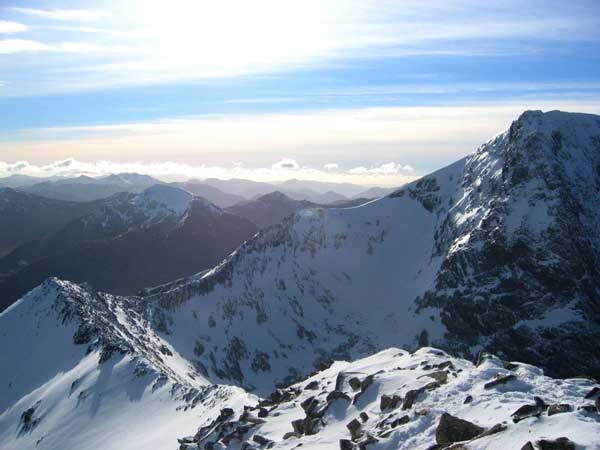
Ben Nevis via the Carn Mor Dearg Arete
For the more experienced hillwalker a route starts at Torlundy, most commonly the North Face car park, a few miles north-east of Fort William on the A82 road, and follows the path alongside the Allt a' Mhuilinn.
For many walkers it can also be reached from Glen Nevis by following the Mountain Track as far as Lochan Meall an t-Suidhe (halfway lochan) and taking the left fork (with the right fork continuing as the Mountain Track). Just as the track begins to climb more steeply again immediately after the lochan, descending slightly towards the CIC (Charles Inglis Clark) Hut (private), while passing the spectacular North Face cliffs, Castle Ridge, Carn Dearg Buttress and Trident Buttress on the way.
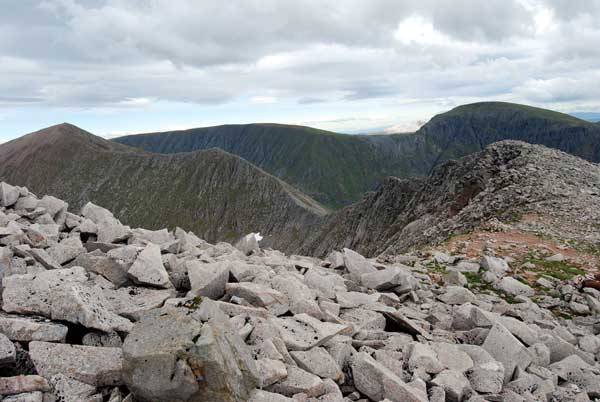
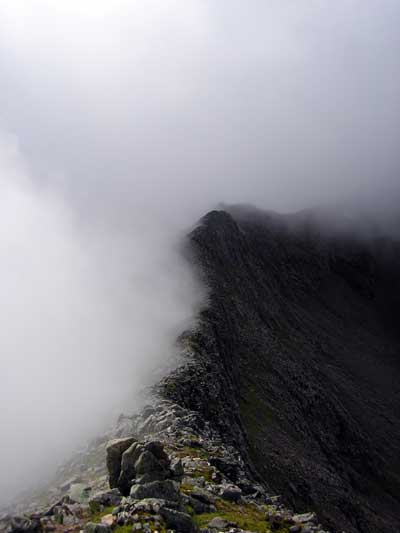
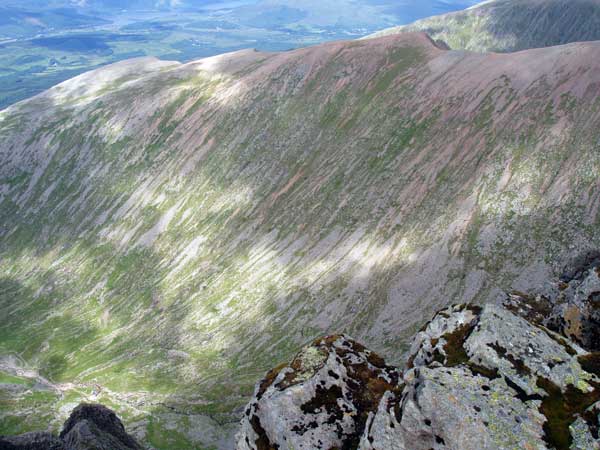
From the CIC Hut the route then makes a very steep ascent of Carn Dearg Meadhonach before a much less exhausting slope leads to Carn Mor Dearg (Scotland's 9th highest munro) and then continues along the breathtaking Carn Mor Dearg Arete before climbing steeply to the summit of Ben Nevis itself. This route involves a total of 1,500 metres of ascent and does require a modest scrambling ability, a head for heights and a decent level of fitness. In common with other approaches on this side of the mountain, as already mentioned, it has the advantage of giving an extensive view of the massive and imposing cliffs of the north face of Ben Nevis which are hidden from the more commonly climbed Mountain Track.
Please note: this walk is generally not considered suitable for children.